Authenticity Is A Crock
The You viewers really want to see


In a recent podcast conversation with Mel Robbins, Seth Godin felt so strongly about this he made sure it was the climax of their discussion.
Here he is explaining what he meant.
Seth is making a critical point, and it’s one that’s often missed in conversations about the kind of delivery viewers value.
It’s an important distinction. Your challenge on camera is not performing in a way that is somehow always an expression of your authentic self. Because there are days you’ll feel authentically lousy. Or distracted. Or days that you authentically disagree with the way the newscast has been organized or written. Or days you’re just authentically bored.
Your challenge is knowing all you can about your authentically engaged self. Your authentically curious self. Your authentically caring self. Your authentically prepared self. It’s literally understanding how you move and speak and think when those versions of you are front and center, and then having the discipline to consistently show up that way — no matter how you’re feeling on any given day.
“Everyone wants you to make the story of you true.”
In other words, the critical question is not, how can you perform more authentically. You have to dig deeper than that. You have to begin by asking, “What story of me do I want viewers to be telling? What story of me do I want to be true for them every time I show up on a newscast or a feed?”
In workshops and coaching sessions, I often encourage talent to try an exercise.
Assume you’ve been wildly successful, and I’ve been hired to research your success. I reach out to 1,000 fans and ask them why they love you so much. What will they say? What story will they tell me about who you are to them?
Try it, and chances are you’ll get to a pretty good description of the You that needs to show up every day, no matter what else may be going on in your life or how you may be feeling authentically — at least going into it. One of the great gifts of having the discipline to focus — especially when you’re not going in feeling it — is the way that being in the moment can somehow evoke the energies and emotions you need for the moment.
Actors often refer to it as the ability to “drop in.” No matter what potential distractions may exist in their personal lives, they know that if they can “drop in” to the moment they’re supposed to be living on stage, the distractions have a way of receding, and they’re able to bring their best selves to the task at hand.
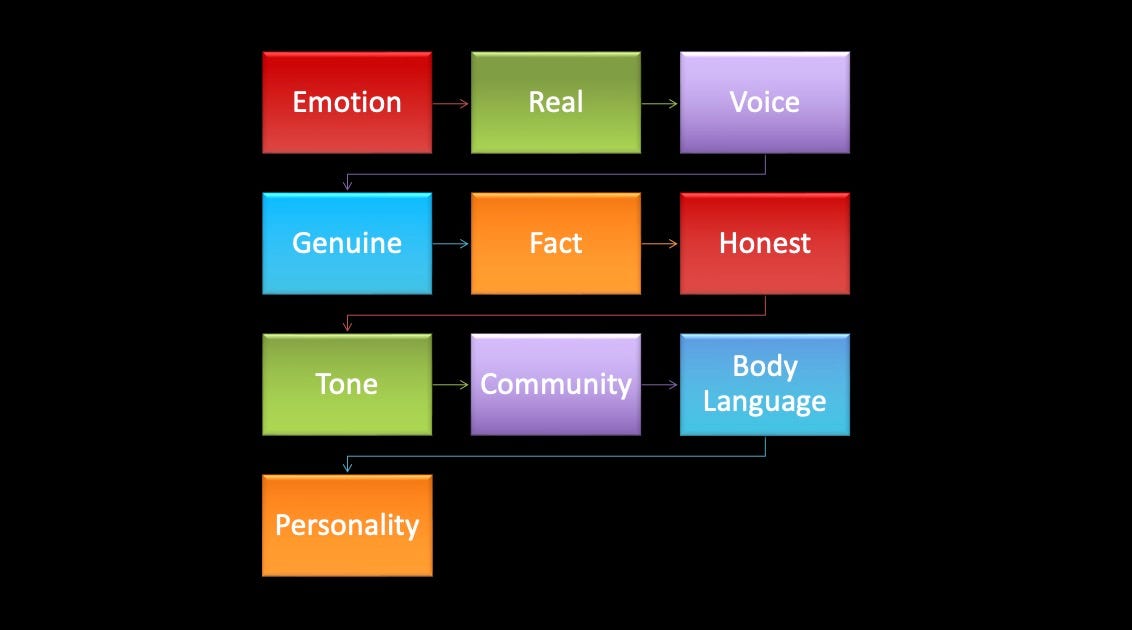
If you’re looking for inspiration, it can help to know something about the story viewers themselves tell about authenticity. In research, when we ask how they can tell when an anchor is being authentic, here are the words they use the most.
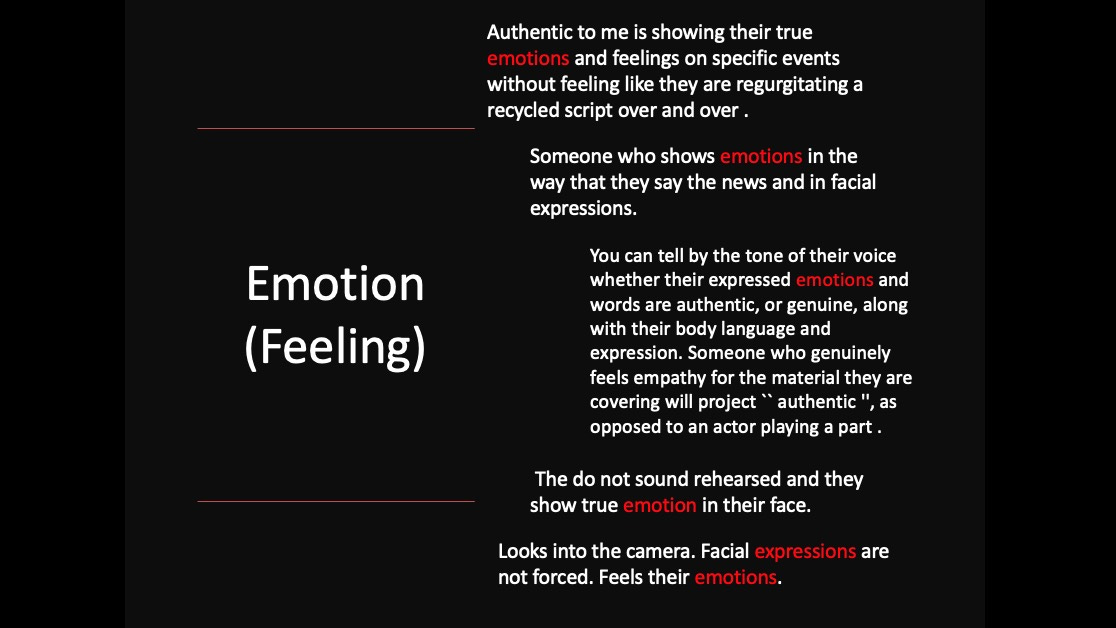
Here’s what they say about Emotion:
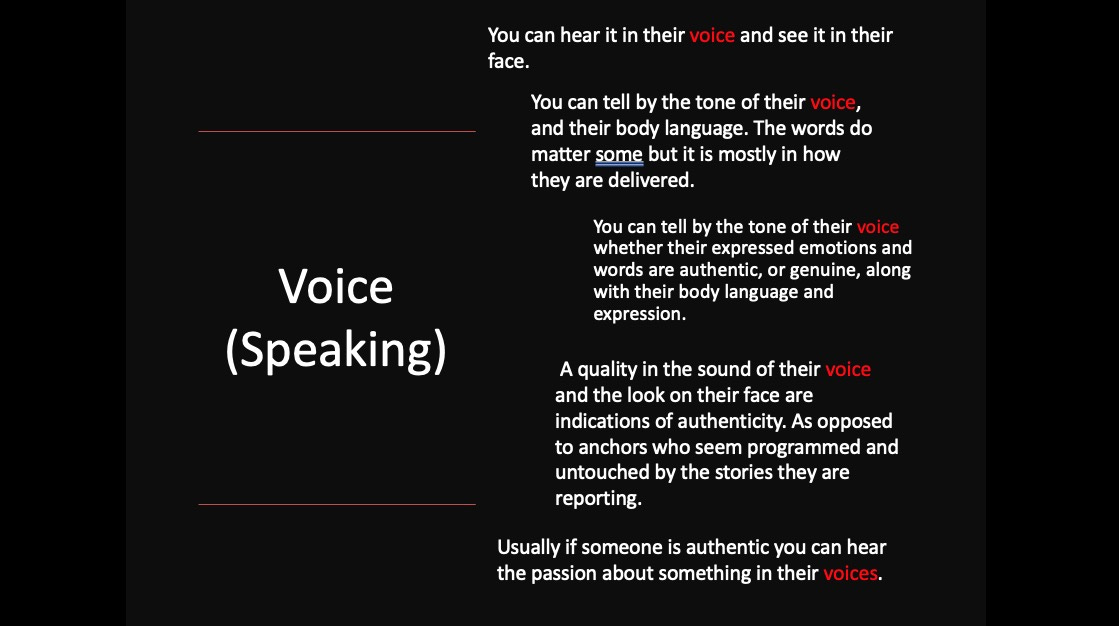
Here’s what they say about how you use your voice:
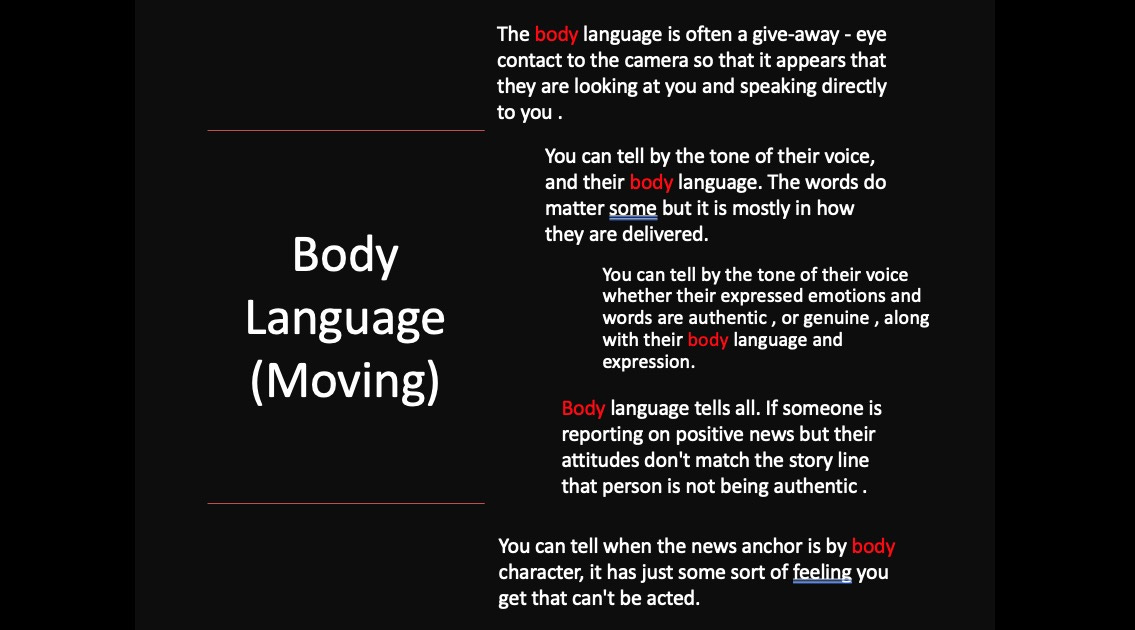
And here’s what they say about body language:
How would the viewers in my research talk about these things in the story they’d tell me about you? How are these things living in the You who shows up consistently on-air day in and day out?
If you’re really honest with yourself about it, what story of you are you really working to make true each day?
In addition to thinking about it all from this perspective, there are a couple of other questions it will be critical for you to answer:
What is a quality job?
Almost daily, I meet with people who struggle to tell me what great work really is. If you don’t have some internal conviction about what doing your job well really means, you have no way to discipline and drive yourself to achieve it.
Don’t take it for granted. Test yourself. Make a list.
Do I have a process that gets me there?
This is Godin’s final question and it really goes to the heart of the matter. “How do you create a practice? How do you create the conditions where it’s easier to (be consistent)?” I sometimes joke in workshops that I’ve never seen a newscast or a performance that wasn’t perfect. Because I’ve never seen a newscast or a performance that wasn’t the perfect result of the process that created it.
It’s not enough to know the story you want viewers believing about you.
You have to commit to a process that makes it true.